July 14
The Google DeepMind CEO says AGI is only a few years away — and calls for an international body to keep watch before it's too late.
 Curated by Thiago Lourenço Martins
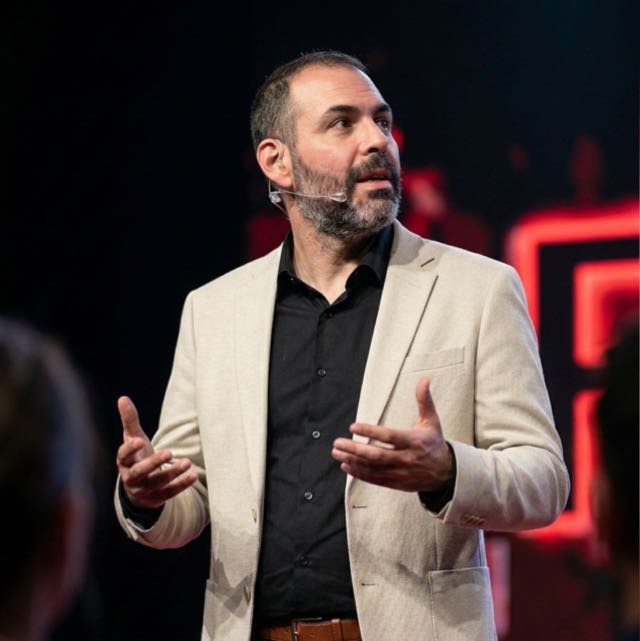
Demis Hassabis says AGI is a few years away — and proposes a US-led global body to oversee its own creation Critical
In a rare essay posted on X, Google DeepMind CEO Demis Hassabis stated that artificial general intelligence (AGI) is only a few years away and that humanity is entering the "first slopes of the singularity." He proposed creating a Frontier AI Standards Body — a public-private organization led by the United States to standardize safety and capability testing for the world's most advanced models, which today are evaluated with no common rules across labs.
This is the most direct statement any frontier lab CEO has made about the AGI timeline — paired with a concrete governance proposal, not just an alarm. When the people building the technology ask to be regulated before being forced to, the debate moves out of theory and into imminent policy decisions.
Companies that depend on frontier models (OpenAI, Google, Anthropic) should treat this as a short-window warning: if an international regulatory standard becomes real in 2026-2027, AI contracts and integrations will need an extra layer of compliance. Start today by mapping which of your company's workflows depend on models that could become targets of external audits.
Trump administration negotiates a framework with industry to speed up American open-source models — a direct response to Chinese pressure High
According to the Washington Post, the Trump administration has been discussing a capability framework with AI companies to release American open-source models faster — at a level equal to or below the leading Chinese open models already available, such as GLM-5.2 and Qwen3.6. The idea is to loosen the review barrier for models that don't pose additional security risk.
This is the first time the US government has treated Chinese open models as a benchmark for acceptable risk — a strategic admission that the US is losing the open-source race. For anyone building products on top of open models, more competitive American options may arrive sooner than expected.
If your company currently hosts a Chinese open model for lack of an equivalent American alternative, keep a close eye on this — a new US model with a more permissive license could show up in the coming months and change the geopolitical and data-compliance risk equation.
The open-model race heats up: Kimi K3, DeepSeek V4 and Ring-2.6 (1 trillion parameters) arrive almost at once High
The open-source community is having a week of simultaneous releases: Moonshot AI (China) is preparing Kimi K3 to ship in the coming days, DeepSeek is expected to release the general version of V4 by the end of the week, and Ant Group (via InclusionAI) has already published Ring-2.6-1T on Hugging Face — a reasoning model with 1 trillion parameters under an MIT license that, according to its technical report, already competes with top closed models.
This isn't an isolated release anymore — it's a wave. Every week a new open model shows up challenging the top of the benchmarks, almost always with a permissive license and a fraction of the cost of closed models. That directly pressures the price any company pays for AI today, no matter the provider.
Before renewing an annual contract with a closed model, run a comparative test with Ring-2.6 or DeepSeek V4 on your most expensive task — the difference in cost per token might justify self-hosting, especially if your usage volume is high.
Meta starts charging for an AI model for the first time — 75% cheaper than rivals High
Meta launched a paid tier of Muse Spark 1.1 for developers — the first time the company has charged directly for use of an AI model. The paid tier's price sits at around 25% of what OpenAI and direct competitors charge for the same type of task, according to Mark Zuckerberg.
Meta has always monetized AI indirectly (engagement, ads). Charging developers directly is a strategy shift — and a price 75% lower is real pressure on competitors that still charge a premium for frontier models.
If your company uses AI at high volume (support, content generation at scale), it's worth testing Muse Spark 1.1 as a cost option — even if it doesn't replace your main model, you can route simpler tasks to it and cut your overall bill.
Google scrapped the entire Gemini 3.5 Pro base and rebuilt it from scratch — new target: July 17 Medium
After months of delays, Gemini 3.5 Pro reportedly went through a complete rebuild — Google is said to have abandoned the original base model and restarted pre-training from scratch. Specs remain officially unconfirmed, but the new launch target is July 17, four days out.
We already flagged this delay on 07/04, when Alphabet's stock drop coincided with news of researchers leaving DeepMind. Now the picture is clearer: it wasn't just a schedule slip — it was a decision to restart the model from zero, which usually signals the previous version wasn't up to the level needed to compete with GPT-5.6 and Claude.
Anyone evaluating a move to Gemini should hold off until the actual launch — a "target" date for a model that has already changed course once tends to slip again.
Anthropic launches Claude for Teachers — a Claude built for the classroom Medium
Anthropic launched Claude for Teachers, a version of Claude built specifically for teachers — with features for lesson planning, assisted grading, and content adaptation by class level, within the company's education-use policies.
Education is one of the slowest sectors to adopt AI, due to internal policy and pedagogical caution. A dedicated product, with Anthropic's name behind it, provides institutional cover that eases adoption across public and private school networks.
If you work in corporate training or educational content, it's worth studying how Claude for Teachers is designed as a reference for structuring AI-assisted tools without looking like you're "replacing" the professional — it's a product pattern that's replicable outside formal education.
Governor JB Pritzker signed 31 new laws in the state, including artificial intelligence regulation rules — part of a wave of state-level legislation in the US in the absence of a single federal law.
→ khqa.comMathematicians used GPT-5.6 to tackle problems from Paul Erdős's list considered open for decades — another case of an AI model contributing to an original mathematical proof, with human validation.
→ youtube.com — OpenAIAn investment to fund artificial intelligence research at Canadian universities and institutes — part of the company's international expansion of academic partnerships.
→ anthropic.comThe OpenAI CEO fired off a series of public posts criticizing Anthropic — including comments on the rival's ad campaigns — reigniting the public rivalry between the two labs.
→ reddit.com/r/singularityA new model in the KAT-Coder line, aimed at coding tasks, has been announced and is already listed on OpenRouter ahead of its official launch — a sign of an imminent release.
→ reddit.com/r/LocalLLaMAGet Radar IA every day on WhatsApp.